
Who Is Responsible for a Broken Sidewalk Injury in Brooklyn, NY?
- Cherny & Podolsky
- November 11, 2026
- 10 min read
Accident & Injury Claims
Table of Contents
- 1. What Makes a Sidewalk Injury in Brooklyn Different from Other Falls
- 2. Which Property Owners Must Keep Sidewalks Safe
- 3. Common Sidewalk Defects That Lead to Falls
- 4. When Small Owner-Occupied Homes Are Exempt
- 5. When the City or Another Party May Share the Blame
- 6. Time Limits for Owner Claims and City Claims
- 7. Frequently Asked Questions
- 8. What to Record After a Fall on a Public Sidewalk
Many people who trip on a cracked Brooklyn sidewalk assume the city is to blame. In many cases, the law points to the owner of the building next to the walkway instead. Knowing who has the duty to fix a sidewalk can change where a claim begins.
A sidewalk injury in Brooklyn can involve a building owner, a homeowner who is exempt from the rule, the city, or a contractor. Each one is held to a different standard. This article explains how those lines are drawn and why they matter after a fall on a public walkway.
1. What Makes a Sidewalk Injury in Brooklyn Different from Other Falls
A fall on a public sidewalk does not fit neatly into the usual property claim. The walkway is public, yet it sits in front of a private building. That mix of public space and private ownership makes the question of fault harder to answer. Cases that fit the slip, trip, and fall accident category often begin with this exact question.
A sidewalk injury in Brooklyn also has its own twist. A single block can include large apartment buildings, shops, brownstones, and small family homes, and the law treats these owners differently.
The injury itself is often simple, such as a raised slab or a broken edge. The hard part is finding out who had the legal job of keeping that spot safe.
2. Which Property Owners Must Keep Sidewalks Safe
New York City places the main duty on the owner of the property next to the sidewalk. According to NYC DOT: Sidewalks, property owners are responsible for installing, repairing, and maintaining the sidewalks next to their properties. The agency also states that owners can be held liable for personal injuries when they fail to keep the sidewalk free of defects.
This duty comes from a city law known as Administrative Code § 7-210, which also makes certain owners liable when a sidewalk defect causes an injury.
Under the law, the owner’s job covers more than patching cracks. It includes:
- Installing and repairing sidewalk slabs
- Replacing flags that are broken or defective
- Clearing dirt, debris, and other material from the walkway
- Keeping the sidewalk in a reasonably safe condition overall
This article focuses on physical defects rather than winter weather, which follows separate rules.
3. Common Sidewalk Defects That Lead to Falls
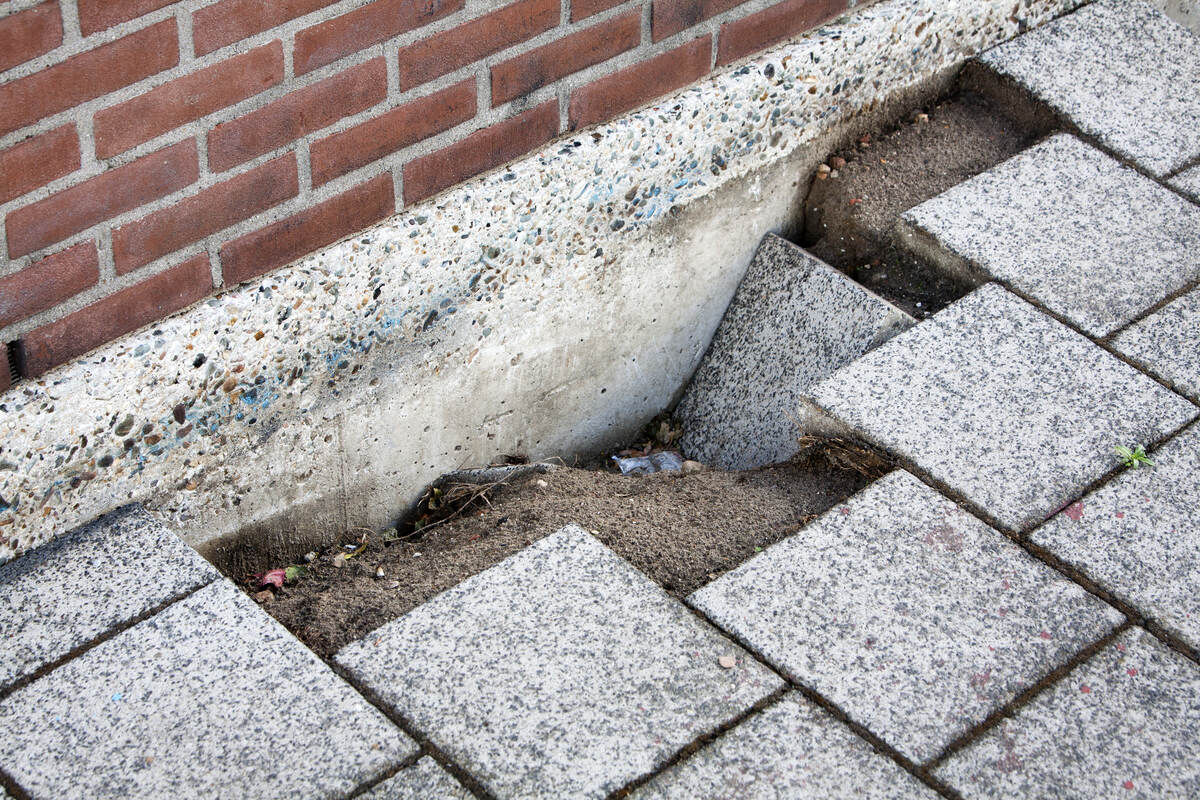
Not every flaw leads to a claim, but a few defects show up again and again in sidewalk cases:
- Raised or sunken slabs that create a lip
- Cracks or holes large enough to catch a shoe or a wheelchair wheel
- Broken or missing pieces along the curb edge
- Loose or shifting stone flags
- Damaged cellar doors or metal covers set into the walkway
There is no set height that makes a defect serious enough. Courts look at the size, the location, and the lighting, and very minor flaws are sometimes treated as trivial. Because size matters so much, clear photos taken with a measuring object nearby can carry real weight.
4. When Small Owner-Occupied Homes Are Exempt
The owner duty has an important exception. According to Vucetovic v. Epsom Downs, Inc., the law exempts one-, two-, and three-family homes from its injury liability. The exemption applies when the owner lives there, even in part, and the property is used only as housing.
For a sidewalk injury in Brooklyn, this exemption matters because it reaches many brownstones, row houses, and small multi-family homes. When it applies, an owner is not automatically liable for a sidewalk defect just because it sits in front of the house. The exemption concerns injury liability, so questions about repair duties are separate.
An exempt owner is not always off the hook, though. A claim may still be possible when:
- The owner created the defect, such as through poor repair work
- The owner used the sidewalk for a special purpose, such as a private driveway ramp
In those cases, ordinary negligence rules apply instead of the city law.
5. When the City or Another Party May Share the Blame
When the exemption applies, the city is often the next place to look. A claim against the city comes with strict conditions, though. In general, the injured person must show one of two things. Either the city received written notice of the defect before the fall, or the city caused the problem itself.
Other parties can be involved as well:
- Contractors who dug up or repaired a section of the sidewalk
- Utility companies that worked beneath the walkway
- Owners of nearby property when a wall, structure, or fixture caused the damage
The Vucetovic decision also held that city-owned tree wells are not part of the sidewalk under the owner liability law. A fall inside a tree well is therefore treated differently from a fall on a slab. Our related article on premises liability claims explains how responsibility works when someone is hurt on another party’s property.
6. Time Limits for Owner Claims and City Claims
Time limits depend on who is being held responsible, and they differ a great deal:
- Claims against a private property owner generally must be filed within three years of the fall
- Claims against the city generally require a written Notice of Claim within 90 days
- A missed city deadline can be hard to fix later
Because a sidewalk injury in Brooklyn can involve both an owner and the city, the shorter 90-day clock often drives the timeline. A court may allow late notice in limited cases, but no one should count on it.
7. Frequently Asked Questions
Who can be held responsible for a sidewalk injury in Brooklyn?
Often it is the owner of the building next to the sidewalk, but the answer depends on the type of property. Small owner-occupied homes are exempt in many cases, and the city, contractors, or utility companies may also be involved.
Does a brownstone owner have to answer for a broken sidewalk in front of the house?
The city law exempts owner-occupied one-, two-, and three-family homes used only for housing from its injury liability. These owners can still face a claim if they created the defect or used the sidewalk for a special purpose. Repair duties are a separate question.
Are tree wells treated the same as the sidewalk?
No. The Court of Appeals held that city-owned tree wells are not part of the sidewalk under the owner liability law. A fall in a tree well is therefore treated differently from a fall on a slab.
How small can a sidewalk defect be before a court dismisses a claim?
There is no fixed height. Courts weigh the size, the location, the lighting, and the surrounding conditions, and very small flaws can be called trivial. Photos with a measuring object nearby are valuable proof.
Can both the owner and the city be responsible for the same fall?
Yes, more than one party can share responsibility when several conditions played a part. Each party is held to its own legal standard, so the proof needed can differ for each one.
8. What to Record After a Fall on a Public Sidewalk
Quick, clear records make it easier to identify the responsible party later. Consider the following:
- Photograph the defect from several angles, with a coin or tape measure for scale
- Note the exact spot, including the cross streets and the building in front of it
- Write down whether the nearby building looks like a small home or a larger property
- Report the hazard to 311 and keep the confirmation number
- Keep medical records from every visit related to the fall
Brooklyn neighborhoods vary a great deal in building type and street conditions. Our accident lawyer in Brooklyn page covers how injury claims are handled across the borough.
💡Key Takeaways
- A sidewalk injury in Brooklyn often turns on who owns the building next to the walkway.
- New York City law makes many property owners responsible for keeping the sidewalk in a reasonably safe condition.
- Owner-occupied one-, two-, and three-family homes are exempt from that injury liability in most cases.
- Claims against the city have strict notice rules and a much shorter deadline than claims against a private owner.
- Clear photos and an exact location can make it easier to identify who is responsible.
WERE YOU HURT ON A BROKEN SIDEWALK IN BROOKLYN?
Sorting out who is responsible for a sidewalk injury in Brooklyn takes careful review of the facts. The type of building, the nature of the defect, and the timing of the fall can all change the answer. Reach out today to discuss what happened and what options may still be available to you.
Disclaimer: This article is provided for general informational purposes only and does not constitute legal advice. Reading this content does not create an attorney-client relationship. Every case involves unique facts, and you should consult a qualified attorney to evaluate the specific circumstances of your situation.
